
contrived
adjectiveDefinition
What Makes This Word Tick
"Contrived" often connotes something that feels artificial or forced rather than natural. It's the difference between a conversation that flows and one that feels like actors reading lines off a script. The word itself is a little like a theatrical performance of its own, suggesting that things aren't quite as spontaneous as they might appear.
If Contrived Were a Person…
If contrived were a person, they'd probably be someone who can't leave the house without meticulously planning out every detail of their day. Their hair would be styled just so, their outfits impeccable, and they'd always have an anecdote ready to fill any awkward silence.
How This Word Has Changed Over Time
Originally, "contrived" shared a closer meaning with "invented" or "devised," which might not sound so bad. Over time, however, it has gained a slightly pejorative tone, often suggesting something that's been over-engineered or lacks authenticity.
Old Sayings and Proverbs That Use Contrived
While there aren't many old proverbs that explicitly use "contrived," the sentiment is captured in sayings like "too clever by half" or "making a mountain out of a molehill," where unnecessary complexity is seen as a fault.
Surprising Facts About Contrived
"Contrived" comes from the Middle English word "contreve," which means to plan or devise. It shares ancestry with the word “contrivance,” often used to describe cleverly crafted devices or machinery that might just be a bit too elaborate for their own good.
Out and About With This Word
In everyday conversation, you might find "contrived" being dropped at a dinner party when discussing the latest movie plot twist that didn't quite land. It's the perfect word for describing things that feel a little too perfectly packaged.
Pop Culture Moments Where Contrived Was Used
Critics might describe a TV show's startling character development as contrived if it doesn't quite mesh with what viewers have come to expect. Think of those sudden marriages in soap operas, where love blooms and dies all in the space of two episodes.
The Word in Literature
In literature, "contrived" often appears in descriptions of plots where events seem too neatly tied up by the final chapter. A mystery novel with an ending that too conveniently resolves all loose ends might earn this descriptor from discerning readers.
Moments in History with Contrived
Think back to the infamous 1929 stock market crash. There's a case to be made that the numerous financial measures put in place afterward could be seen as government efforts to control what many felt was an unpredictable beast.
This Word Around the World
In French, "contrived" aligns somewhat with "artificiel." Meanwhile, in German, it shares a kinship with "gekünstelt," both capturing the sense of something unnatural or overly thought out.
Where Does It Come From?
The word "contrived" is derived from the Latin "controvare," which blends "con," meaning together, and "trovare," meaning to find or invent. There's a delightful irony in its etymology that highlights its current connotation of artificiality.
How People Misuse This Word
Many use "contrived" when they really mean "complex" or "intricate." While something contrived may be those things, it carries a specific connotation of being artificially imposed rather than genuinely complex.
Words It's Often Confused With
- Complex: While both may describe intricate situations, "complex" lacks the negative connotation.
- Artistic: Mistakenly interchanged, but "artistic" often denotes something creative rather than forced.
- Calculated: Implies a planned approach more than an unnatural one.
Additional Synonyms and Antonyms
Synonyms for "contrived" might include "forced," "unnatural," or "stilted." Its antonyms could be "natural," "genuine," or "effortless."
Want to Try It Out in a Sentence?
"Despite the beautiful setting, the movie's love story felt contrived, as though the scriptwriters were ticking off boxes on a romantic checklist."
Explore more words

hodgepodge
[hoj-poj]
a heterogeneous mixture; jumble

disintegration
[dis-in-ti-grey-shuhn]
the process of breaking into smaller parts

writhe
[rahyth]
to twist or contort the body in pain or discomfort

misunderstand
[m-is-und-erst-and]
to fail to correctly interpret or comprehend something.

ensorcell
[en-sawr-suhl]
to bewitch, charm, or enchant

still
[stil]
not moving or making a sound; calm and quiet
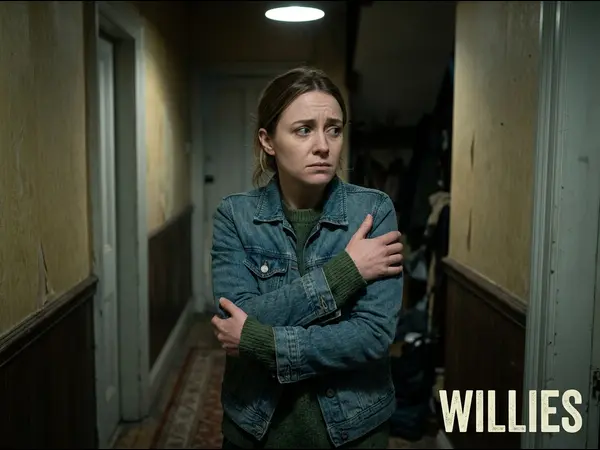
willies
[wil-eez]
a strong feeling of nervousness or unease

lucubrate
[loo-kyoo-breyt]
to write learnedly

glower
[glou-er]
to look or stare with sullen dislike, discontent, or anger

amorphous
[uh-mawr-fuhs]
without a clearly defined shape or form; lacking a clear structure or focus

fabricate
[fab-ri-keyt]
to devise or invent (a legend, lie, etc.)
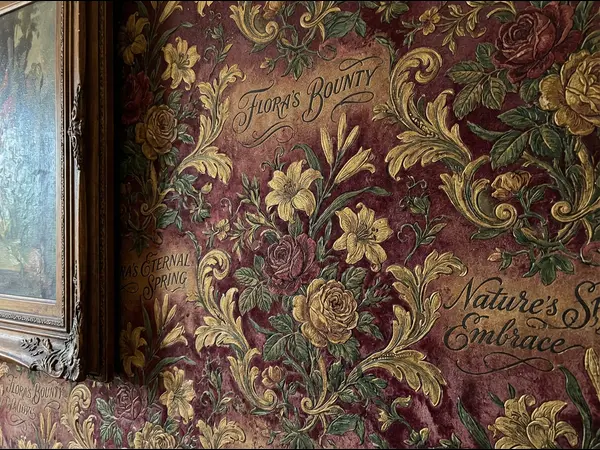
flowery
[flow-er-ee]
decorated with flowers; overly elaborate in style

mammonism
[mam-uh-niz-uhm]
the greedy pursuit of riches

defenestrate
[dee-fen-uh-streyt]
to suddenly remove (a person) from an important position or office

commemorate
[kuh-mem-uh-reyt]
to serve as a memorial or reminder of

brumal
[broo-muhl]
wintry