
overlord
nounDefinition
What Makes This Word Tick
An overlord is a person in authority, especially one who exercises control in a domineering way. The word isn’t neutral—it leans toward power that feels heavy-handed, as if authority is used to dominate rather than guide. Compared with leader, overlord suggests hierarchy and control with an intimidating edge.
If Overlord Were a Person…
Overlord would be the figure on the high balcony who expects obedience without discussion. They speak in commands, not requests, and they like their control visible. Being around them feels like walking in a room where you’re constantly being measured.
How This Word Has Changed Over Time
Overlord has remained a forceful word for dominating authority, and it still tends to carry a critical tone. Modern usage often uses it to highlight control that feels excessive or overbearing.
Old Sayings and Proverbs
Proverb-style warnings about power used without restraint fit overlord well, because the word focuses on domineering control. It’s the kind of authority that invites resistance in stories and in real life.
Surprising Facts
Overlord often sounds dramatic on purpose, which is why it’s common in strong critiques and high-stakes storytelling. Even when used humorously, it still implies a steep hierarchy: one dominates, others submit. In writing, it can instantly raise the temperature of a power dynamic.
Out and About With This Word
You’ll see overlord used when someone wants to emphasize controlling authority—whether in historical-feeling settings, workplace complaints, or dramatic descriptions of hierarchy. It’s most natural when the control is domineering, not merely administrative. The word fits best when power feels imposed from above.
Pop Culture Moments Where Overlord Was Used
In pop culture, overlords often appear as domineering rulers or controllers—figures who demand loyalty and treat others as subjects. That reflects the definition because the authority is not just official, but dominating in style. The word signals a power imbalance immediately, even before details are explained.
The Word in Literature
In literary writing, overlord is often used when authors want a sharp label for oppressive authority without a long explanation. It pushes tone toward tension and hierarchy, shaping readers’ expectations of coercion and submission. The word also helps characterize rule as domineering, not merely organized.
Moments in History with Overlord
The concept behind overlord fits historical scenarios where hierarchy is steep and authority is enforced through domination—systems where subjects have little say. This matches the definition because it emphasizes controlling power used in a domineering way. The word is most at home where authority feels imposed rather than shared.
This Word Around the World
Across languages, the idea is commonly expressed with words meaning “tyrant,” “ruler,” or “master,” often adding an extra note of oppression or domination. The exact expression varies, but the sense stays clear: authority exercised in a domineering way.
Where Does It Come From?
The inventory’s etymology note is difficult to reconcile with the word’s clear English form and meaning, so it can’t be safely expanded beyond what’s provided. The modern sense remains straightforward: a dominating authority figure.
How People Misuse This Word
Overlord is sometimes used for any boss or manager, but it implies domineering control, not ordinary supervision. If the authority is routine and not oppressive, leader or supervisor is usually more accurate.
Words It’s Often Confused With
Overlord is often confused with leader, but leader can be neutral or positive while overlord leans dominating and overbearing. It can also overlap with tyrant, though tyrant usually emphasizes cruelty or injustice, while overlord emphasizes domineering control more broadly.
Additional Synonyms and Antonyms
Additional Synonyms: tyrant, despot, autocrat Additional Antonyms: underling, vassal, subordinate
Want to Try It Out in a Sentence?
"The duke ruled over the region like an overlord, with absolute control."
Explore more words

taboret
[tab-er-it]
a stool-like seat for one person

docile
[dos-uhl]
ready to accept control or instruction; submissive

repugnant
[ri-puhg-nuhnt]
in conflict with; incompatible with

kiln
[kiln]
a furnace or oven for burning, baking, or drying something, especially one for firing pottery, calcining limestone, or baking bricks

hodgepodge
[hoj-poj]
a heterogeneous mixture; jumble

malign
[muh-lahyn]
to speak harmful untruths about; speak evil of; slander; defame

brash
[brash]
confident in an aggressive or rude way

commemorate
[kuh-mem-uh-reyt]
to serve as a memorial or reminder of
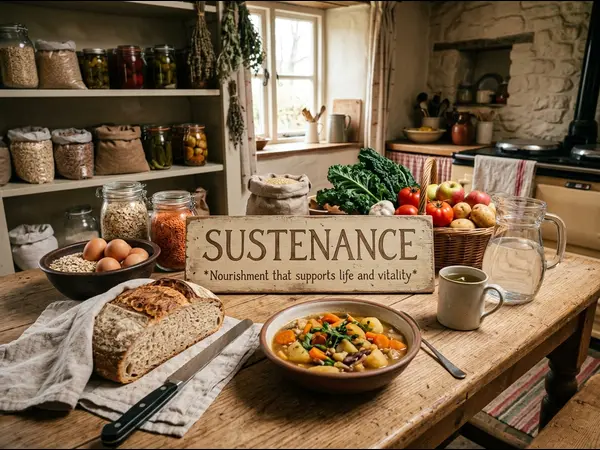
sustenance
[suhs-tuh-nuhns]
food or drink regarded as a source of strength or nourishment

puerile
[pyoo-er-il]
childishly foolish, immature, or trivial

prophet
[prof-it]
a person regarded as an inspired teacher or proclaimer of the will of god

defraud
[dih-frawd]
to cheat or deceive someone out of something valuable

corroborate
[kuh-rob-uh-reyt]
confirm or give support to (a statement, theory, or finding)

capitulate
[kuh-pich-uh-leyt ]
to surrender unconditionally or on stipulated terms

fragmentary
[fr-agm-ent-ary]
consisting of small, incomplete parts or pieces.

battery
[ba-tte-ery]
a device that supplies power